In this guide
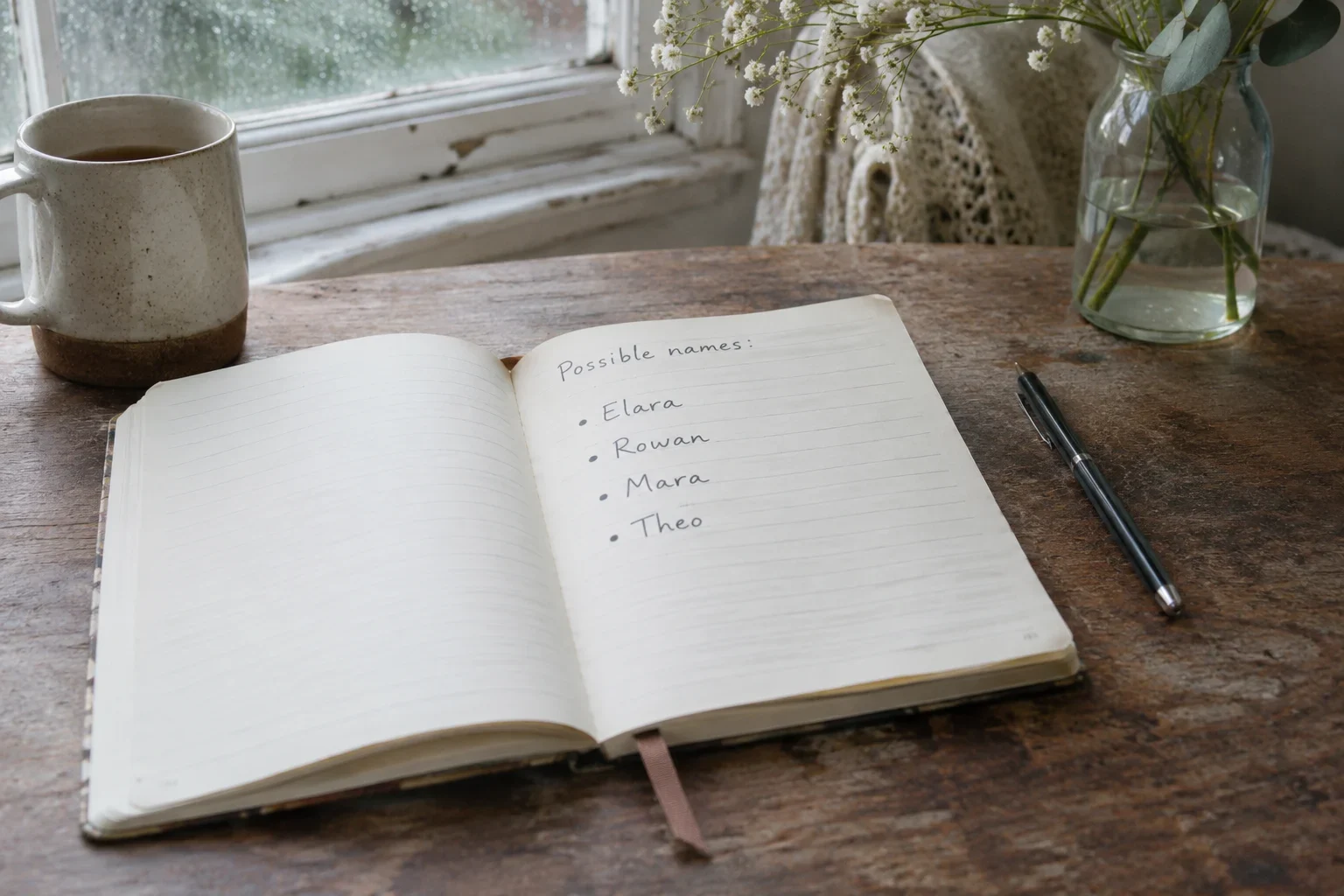
A person name generator can help you find a pen name by giving you possibilities to react to, combine and test. Start with the kind of author identity you want, generate a varied list, and then narrow it down through practical checks. The strongest candidate is one you feel comfortable using and that readers can recognize and find.
A pen name is a name you publish under instead of your legal name. Whether you want a little distance between your writing and your private life or simply a different name on your books, treat the generator as a starting point. Your judgment and your checks turn a promising suggestion into a considered choice.
Define what the pen name should do
Before generating names, write a short description of the identity you want to create. Note your genre, the tone of your writing and the impression you hope a name will give a reader. You might want something understated, distinctive, formal or approachable. These are preferences to guide your search, not rules you have to follow.
Think about your future work as well as your current project. If you may publish in several genres, decide whether you want one name that feels comfortable across them or whether this choice is primarily for one kind of book. A name that fits your immediate project but feels restrictive elsewhere may be less appealing once you imagine it on another cover.
Consider your privacy goals in practical terms. Decide how separate you want your publishing identity to feel from your everyday identity and which details you are comfortable sharing alongside it. A pen name can be part of that plan; take time to consider the other information you may associate with your public author profile.
Finally, choose two or three priorities to use throughout the process. For example: easy to say aloud, suitable for more than one genre and comfortable to answer to. Keeping these criteria visible will help you judge candidates consistently when a particularly striking name catches your eye.
Generate a varied first list
Open the person name generator and review its language and name-format choices. Select an option that interests you, generate a group of names and save the ones that have some potential. Then try other available choices to widen the list. Use the labels shown in the tool to decide what to try; you do not need to settle on a single format at this stage.
If you already have a surname you want to explore, use the surname override when generating full names. Keep that surname in place while you review different first-name combinations. This gives you a way to compare how the same surname feels with several alternatives. You can also generate names without anchoring your search to that surname, so your initial preference does not prevent you from finding something better.
Aim for variety in your notes: a few full names, any appealing initial-based versions you create, and combinations with different rhythms or lengths. Record the name as you would like it to appear, including punctuation if you plan to use initials. If a generated first name works but the surname does not, note the first name as an idea for another combination.
Treat every output as a candidate, not an endorsement or a clearance check. A name can sound right and still be difficult to find, uncomfortable to use or too close to someone else’s. Save those questions for the next rounds rather than trying to answer everything while you generate.
Shortlist for genre and identity
Return to the priorities you wrote down and reduce your list to a manageable set. For each candidate, ask what impression it gives you and whether that impression supports the work you intend to publish. You can prefer a name that feels familiar, surprising or hard to place; the point is to make the choice deliberately.
Look at author names in your intended category and place your candidates beside them in a simple list. Notice what feels at home and what stands apart, without treating any pattern as a requirement. Genre conventions are flexible, and a name does not have to resemble other authors’ names to be a good choice. If you write in more than one category, repeat the comparison for each.
Try the same candidate in a few forms if they appeal to you: a full first name and surname, or initials with the surname. Say each version and imagine introducing yourself with it. Initials may create a different impression from a full first name, and a consistent surname may matter to you if you are considering related names for different projects.
Keep several finalists rather than choosing immediately. Write a brief reason beside each one, such as “works for both projects” or “easy for me to say.” Those notes make the final comparison easier if a later search reveals a possible conflict.
Test reading, pronunciation and recall
A name needs to work in more than one setting: on a cover, in a spoken introduction and when a reader tries to find it again. Give each finalist a small set of practical tests before becoming attached to it.
Read the name aloud several times, first on its own and then in a sentence such as, “My new book is by this author.” Notice whether you can say it naturally and whether you would feel comfortable hearing someone address you by it. If you use initials, decide how you would say them aloud and check that the spoken version still feels right.
Ask someone to help with two separate exercises. First, show them the written name and ask how they would pronounce it. Later, say the name without showing it and ask them to write it down. Differences are useful information, not automatic reasons to reject a candidate. Decide whether a likely correction is something you are happy to make.
For a visual check, type each finalist as it might appear on a cover and view it at a small size. Put the names beside other author names in your category and see which you can read quickly. You can also show a name briefly, move on to another task and ask your helper what they remember. Keep notes on the results so you can compare candidates instead of relying on the last test you did.
Investigate confusion and availability
Search each finalist as an exact name, then try close variants. Include versions with and without punctuation in initials, plausible spelling variations and the name alongside words such as “author” or your genre. Look for existing authors and public figures readers might reasonably mistake for you. Review the results as a whole: one similar name may deserve a closer look even if the exact wording differs.
Keep a record of what you find and which search terms you used. If a result seems close, consider whether a reader who remembers only part of your name could distinguish the two. A candidate that is easy to pronounce but difficult to distinguish in search results may be less useful than another finalist.
Next, check the domains and social handles you would actually want to use. Look for the name itself and any acceptable variations, then note which options appear available at the time of your search. Decide in advance how much variation you would accept: a longer handle may be workable, but it should still feel recognizable to you and your readers.
Check relevant trademark records as part of your review, using the jurisdictions and categories that matter to your plans. A search can help you identify potential issues, but deciding what a result means for your circumstances may require qualified legal advice. If you find a conflict or are unsure about a result, investigate it before committing to the name.
Choose a name for the long term
Compare your remaining candidates against the same criteria. A simple table can make trade-offs visible:
| Question | What to note |
|---|---|
| Does it fit the work? | Your reaction to the name in each genre you may publish in |
| Can readers use it? | Results of the reading, spelling and recall exercises |
| Could it cause confusion? | Similar names and search results that need attention |
| Can you use it online? | Suitable domain and handle options you found |
| Does it feel comfortable? | How you feel saying it and answering to it |
You do not need a perfect score in every row. Decide which compromises you can accept and which would make the name frustrating to use. For instance, you might accept a handle that adds a word if the name remains recognizable, while deciding that frequent confusion with another author is too much of a drawback.
Before settling on a winner, revisit any unresolved search results and repeat availability checks where they matter to your plans. If a new issue makes a finalist less attractive, return to your shortlist or generate another batch using what you have learned.
Finally, live with your preferred name for a little while. Write it beside a project title, use it in a practice introduction and imagine answering to it at an event. Choose the candidate that serves your work and feels like an identity you can comfortably maintain.