Contents
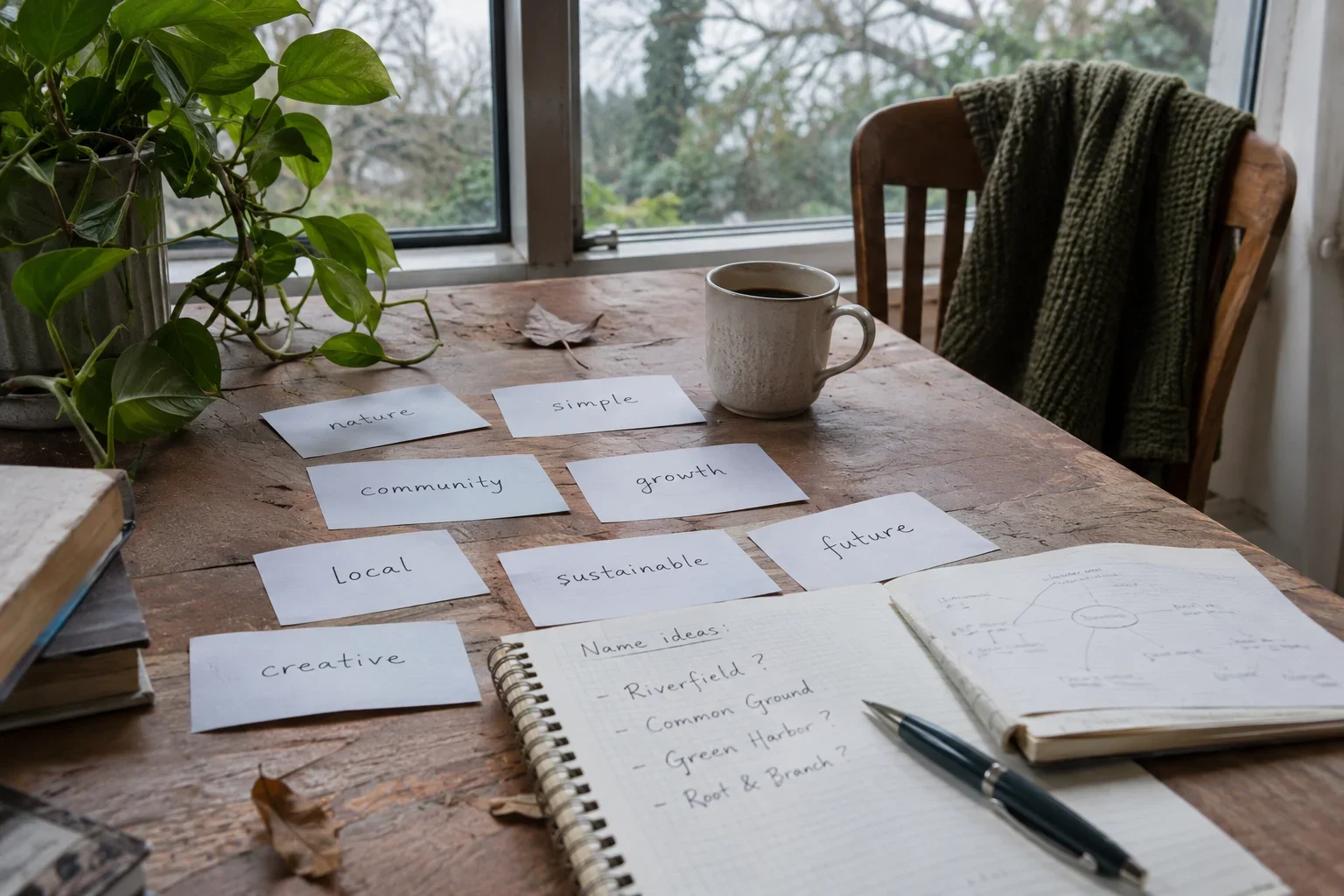
Start with what your app helps people do, who it serves, and the feeling you want its name to convey. Turn those ideas into a small set of keywords, use a brand name tool to explore combinations, and keep only the suggestions that suit your purpose. Then test the strongest candidates with prospective users and investigate existing use before making a choice.
A generated name is a starting point, not a final recommendation. The most useful result may be a word, sound, or association that leads you to a simpler idea of your own. This guide walks through each decision, from writing a brief to comparing a shortlist you can explain and evaluate.
Turn the app idea into a naming brief
A short brief gives you a way to judge suggestions before a long list becomes distracting. Write down the app’s main purpose in one sentence, identify the people you hope will use it, and note the markets or locations you intend to serve. Then choose two or three qualities you want the name to convey, such as calm, energetic, practical, or playful.
For example, imagine an app that helps busy people plan meals. Its brief might emphasize making planning feel manageable, with a warm and practical tone. That gives you more direction than a broad request for a name that sounds good. If the app could later support shopping or other household planning, note that too: a name tied to one feature may feel restrictive as the idea grows.
Build a keyword bank
List words in three groups: the task people want to complete, the benefit they hope to get, and the associations that match your desired tone. For the meal-planning example, those groups might include “plan,” “ease,” and “table.” Add alternatives with a thesaurus, but keep words you understand and that make sense for the intended audience.
Use the brief as a filter rather than a formula. A name does not have to describe every feature, but you should be able to explain why it fits. Keep the brief nearby as you explore, and revise it if you discover that the audience or the app’s purpose needs a clearer description.
Generate names in small batches
Choose one keyword from your brief and enter it into the brand name tool. If the tool offers a choice between studio and tech directions, try one direction first and review the suggestions before changing anything. Save or note the candidates and fragments that catch your attention, even if they are not finished names.
Next, try the same keyword with the other direction, if available. Compare what changes: do the suggestions feel more playful, formal, descriptive, or abstract to you? These are judgments to make from the results, not fixed meanings you need to assign to either direction. If the tool does not offer those options, use the controls it does provide and compare the results against your written tone instead.
Then change one keyword while keeping the rest of your approach as consistent as the tool allows. A task word such as “plan” may prompt different ideas from a benefit word such as “ease.” Repeating this process in small batches makes it easier to see which inputs lead toward your brief and which take you away from it.
Keep a simple record
For each batch, note the keyword, any direction you selected, and the suggestions or pieces you want to revisit. Add a short reason, such as “warm sound” or “suggests organization.” If a batch feels too narrow or confusing, record that too. You can then return to a promising approach without relying on memory, and stop generating once you have enough varied material to refine.
Refine and shortlist suggestions
Treat each suggestion as raw material. Try removing a word, replacing a complicated part with a familiar one, or using an association from the result to create a fresh candidate. Read every revised version on its own: a shorter name is useful only if it still feels clear and appropriate for the app.
Compare your candidates using the same questions. Does the name fit the audience and desired tone? Is it easy for you to say aloud? Can you remember it after looking away? Does it leave room for the app to grow beyond its first feature? These checks help you choose a varied shortlist instead of keeping several names that have the same weakness.
| Check | Question to ask |
|---|---|
| Fit | Does the name suit the app’s purpose, audience, and tone? |
| Clarity | Could it suggest an unintended meaning or a different kind of app? |
| Sound | Is it comfortable to say and distinguish from other words? |
| Recall | Can you remember it after a short break? |
| Flexibility | Would it still make sense if the app expanded? |
Write down both strengths and concerns. For example, a descriptive candidate might communicate the first feature well but feel too narrow for future plans; a more abstract one might allow room to grow but need explanation. Keep a few distinct options for user testing, including any candidate you like but are unsure how others will interpret. Your own reaction is a useful first filter, not proof that a name will work for everyone.
Test names with prospective users
Show or say your shortlisted names to people who resemble your intended audience. Ask each person to react before explaining what the app does. This helps you notice interpretations you may miss because you already know the idea. Make clear that you want candid reactions, including confusion or dislike.
Use a few practical prompts for each candidate:
- Pronunciation: Show the name and ask the person to say it aloud. Note where they hesitate or offer more than one pronunciation.
- Spelling: Say the name without showing it and ask them to write it down. Compare what they write with your intended spelling.
- Meaning: Ask what they think the app might help them do and what feeling the name gives them.
- Recall: Discuss something else briefly, then ask which names they remember and how they would spell them.
Avoid correcting people during the exercise; their first response is the information you need. Record the words they use and look for repeated questions or misunderstandings across participants. A single reaction can reveal something worth exploring, while a recurring issue may be a reason to revise or remove a candidate.
Afterward, explain the app and ask whether their impression changes. Compare this feedback with your brief: a name can sound appealing yet suggest the wrong purpose or tone. If you revise a name substantially, ask another prospective user to try the revised version before moving it forward.
Investigate existing use before choosing
Once you have a manageable shortlist, investigate each candidate in the markets where you intend to offer the app. Search app platforms and the web for the exact name and plausible variations, including spellings people used during testing. Look for similar apps or businesses as well as uses that could create confusion about what your app does or who provides it. Search relevant hosting sites too, particularly if they matter to how you plan to present or distribute the project.
Check relevant trademark databases for your main markets, and investigate whether the domains and social handles you want are available. Keep the checks separate: a domain or handle that appears available does not settle the question of existing business or trademark use. If a candidate raises a difficult trademark question, consider getting qualified advice for the relevant market before committing to it.
Make the decision traceable
Use a simple comparison sheet with one row per candidate. Record where you searched, the variations you tried, potentially similar uses, the domain and handle results, and questions that still need answers. Note when you checked so you know what may need another look before you commit.
Return to your user feedback and brief alongside those findings. A name that people understand and remember may still need further investigation; another may have fewer apparent conflicts but weak fit. Resolve the questions you can, decide whether any remaining uncertainty needs professional advice, and choose the candidate that best balances fit, clarity, flexibility, and your investigation. Keep the other shortlisted ideas and your notes in case your preferred name needs further work.